
 English
 Español
 عربى
عربى русский
Contáctenos
Su dirección de correo electrónico no será publicada. Los campos obligatorios están marcados *
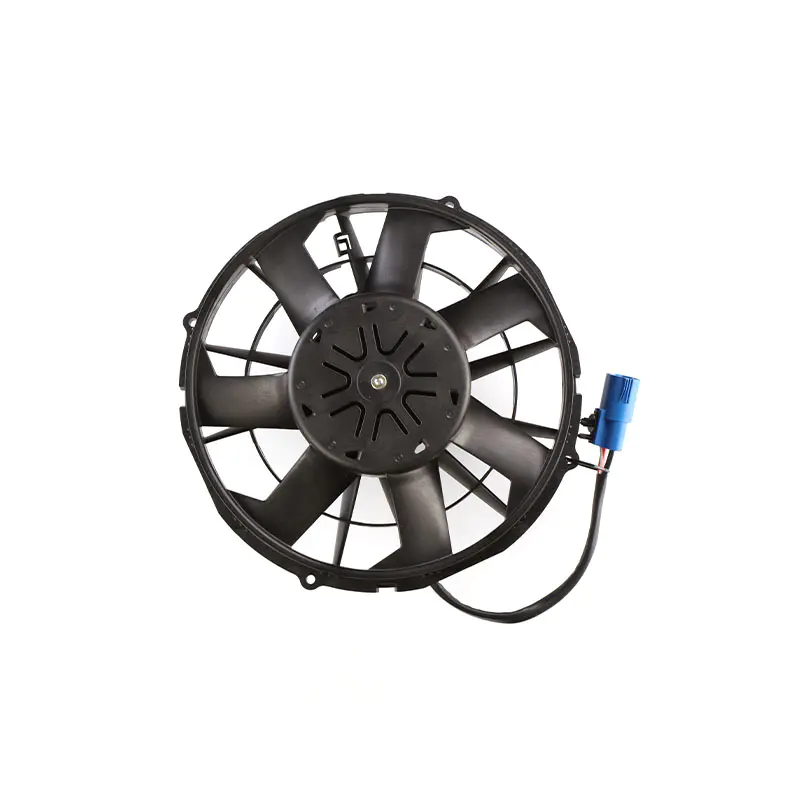
El cambio hacia la electrificación y una mayor densidad de energía ha redefinido la gestión térmica. Los motores de combustión interna, los motores eléctricos, los paquetes de baterías y los dispositivos electrónicos de potencia generan calor que debe disiparse de manera confiable. Ventiladores axiales para automóviles de CC han surgido como la solución principal para la refrigeración por aire forzado en estos entornos. A diferencia de los ventiladores de CA heredados, las variantes de CC se integran perfectamente con los sistemas eléctricos del vehículo y ofrecen una controlabilidad precisa.
Esta guía proporciona a los ingenieros y especialistas en adquisiciones datos prácticos, desde principios operativos fundamentales hasta una lista de verificación técnica previa a la compra. Nos centramos en arquitecturas DC sin escobillas (BLDC), que dominan las modernas refrigeración automotriz por su durabilidad y eficiencia.
Información clave: Un ventilador axial BLDC típico funciona entre 25 000 y 40 000 horas frente a 3000 horas para los tipos con escobillas, un diferenciador fundamental para aplicaciones de vehículos eléctricos y de servicio pesado.
Un ventilador axial mueve aire a lo largo del eje del eje del impulsor. El aire entra paralelo al eje y sale en la misma dirección, lo que hace que estos ventiladores sean ideales para aplicaciones de alto flujo y presión baja a media, como refrigeración de radiadores y climatización.
Los sistemas eléctricos de los vehículos son inherentemente CC (12 V o 24 V). Usando un ventilador axial DC sin escobillas para automoción El diseño elimina la necesidad de inversores, reduce el peso y permite el control directo de velocidad PWM. El motor BLDC utiliza conmutación electrónica en lugar de cepillos mecánicos, lo que elimina las pérdidas por fricción y los riesgos de chispas.
La arquitectura sin escobillas aborda directamente los puntos débiles de los ventiladores con escobillas tradicionales: vida útil corta, ruido audible y mala regulación de la velocidad. A continuación se muestra una comparación directa.
| Característica | Motor cepillado | Axial CC sin escobillas |
|---|---|---|
| Vida útil (horas) | ~3000 | 25.000–40.000 |
| Eficiencia | Línea de base | Hasta un 20% más |
| Nivel de ruido | Mayor (fricción del cepillo) | Inferior (conmutación suave) |
| control de velocidad | Encendido/Apagado o escalonado | PWM continuo |
| corriente de irrupción | Pico grande | Arranque suave, protegido |
| motores size | Más voluminoso | Compacto |
La conmutación electrónica en los motores BLDC permite funciones avanzadas como control PWM del ventilador automotriz , que ajusta la velocidad linealmente sin el estrés térmico de los métodos basados en resistencias. Esto es particularmente valioso para el enfriamiento de baterías de vehículos eléctricos, donde las cargas térmicas varían dinámicamente.
Seleccionar el ventilador adecuado requiere una revisión sistemática de los límites del flujo de aire, eléctricos, térmicos y mecánicos.
Los valores mínimos de CFM dependen del desplazamiento del motor y la carga de calor. Estos son puntos de referencia generales para la refrigeración por aire forzado con un radiador limpio.
Confirme siempre si la clasificación CFM se mide al aire libre o con el núcleo del radiador instalado. un ventilador axial de alto CFM en condiciones de aire libre puede caer entre un 30% y un 50% cuando está cargado.
Los turismos utilizan sistemas de 12V; Los vehículos comerciales y equipos todoterreno utilizan 24 V. El rango de operación debe cubrir las condiciones transitorias del vehículo. Para sistemas de 24 V, solicite un rango de trabajo de 16 a 32 V para adaptarse a la ondulación del alternador y descargas de carga.
La temperatura ambiente define la selección de materiales y la lubricación de los rodamientos. Clases típicas:
Solicite siempre la curva de reducción térmica al proveedor. un ventilador axial para refrigeración de vehículos eléctricos Los vehículos montados cerca del paquete de baterías pueden tener una temperatura ambiente sostenida de 75 °C, mientras que las ubicaciones debajo del capó superan los 100 °C.
La vida L10 es el tiempo (en horas) hasta que el 10% de una población falla a unas RPM y temperatura determinadas. Compare los datos de L10 en su punto de funcionamiento específico, no a temperatura ambiente nominal.
un ventilador axial IP68 con electrónica sellada garantiza confiabilidad en barro, niebla salina y agua estancada.
La versatilidad de los ventiladores axiales de CC sin escobillas abarca múltiples tipos de vehículos y sistemas.
Antes de emitir una orden de compra o solicitar muestras, verifique estos puntos críticos con su proveedor. Esta lista reduce el riesgo de errores de integración.
El uso de esta lista de verificación garantiza que el ventilador seleccionado sea compatible con entornos automotrices del mundo real. Un confiable Proveedor de ventiladores axiales DC proporcionará estos datos sin dudarlo.
Los ventiladores axiales de CC sin escobillas para automóviles ofrecen una longevidad, eficiencia y capacidad de control superiores en comparación con las soluciones tradicionales con escobillas o de CA. Su adopción respalda directamente las demandas térmicas de los sistemas de propulsión electrificados y de alto rendimiento.
Al seleccionar un ventilador, dé prioridad a los CFM verificados bajo carga, la reducción de temperatura validada y la vida útil comprobada de los rodamientos. Involucrar a proveedores que ofrezcan soporte de ingeniería durante la fase NPI y que puedan acomodar interfaces eléctricas y mecánicas personalizadas.
Para obtener tamaños detallados, solicitudes de muestras o precios por volumen, comuníquese con nuestro equipo técnico de ventas. Proporcionamos recomendaciones específicas de la aplicación y datos de rendimiento documentados.
En condiciones normales de funcionamiento (ambiente entre 40 °C y 70 °C, rodamientos de bolas), la vida útil de L10 suele oscilar entre 25 000 y 40 000 horas. A temperaturas más altas, la vida útil disminuye; Consulte siempre la curva de reducción del fabricante.
Los vehículos de pasajeros utilizan sistemas de 12V; Los camiones comerciales, autobuses y equipos todoterreno utilizan 24 V. Elija según la arquitectura eléctrica de su vehículo. Existen algunos ventiladores de doble voltaje, pero son menos comunes y, a menudo, menos eficientes.
IP68 es hermético al polvo y está protegido contra inmersión prolongada hasta 1 metro. IP6K9K agrega protección contra chorros de agua a alta presión y alta temperatura, adecuado para el lavado de maquinaria pesada. Ambos se utilizan en automoción, pero IP6K9K es más riguroso.
Técnicamente sí, pero añade complejidad, costo y posibles puntos de falla. Es más eficiente y confiable seleccionar un ventilador específicamente clasificado para el voltaje de su sistema.
El control PWM permite un ajuste continuo de la velocidad, lo que reduce el ruido durante la carga parcial y mejora la eficiencia energética. También minimiza la tensión de los ciclos térmicos en los devanados del motor, lo que prolonga la vida útil.
Su dirección de correo electrónico no será publicada. Los campos obligatorios están marcados *

Zhejiang Nicety Electric Machinery Co., Ltd. se especializa en la producción de cuatro series de productos: ventilador electrónico de condensador, ventilador de radiador (tanque de agua), soplador y conjunto de aire acondicionado.
Correo electrónico: [email protected] / [email protected]
Teléfono: +86-0578-7125439 / +86 181 0658 9231
Dirección:No. 98, Calle Guangda, Zona Industrial Jinsha, Ciudad de Longquan, Provincia de Zhejiang, China